Jehovah’s Witness conscientious objector Elgiz Ibrahimov will serve the rest of his one-year sentence not in prison but on probation under restrictions, wearing an electronic tag. On 26 November, Sheki Appeal Court upheld his conviction for rejecting compulsory military service on grounds of conscience. The Judges said his nearly 4 months in prison “will deter him from committing acts that could lead to the loss of his freedom in the future”. Despite its Council of Europe commitment to introduce alternative civilian service by 2003, Azerbaijan failed to do so.
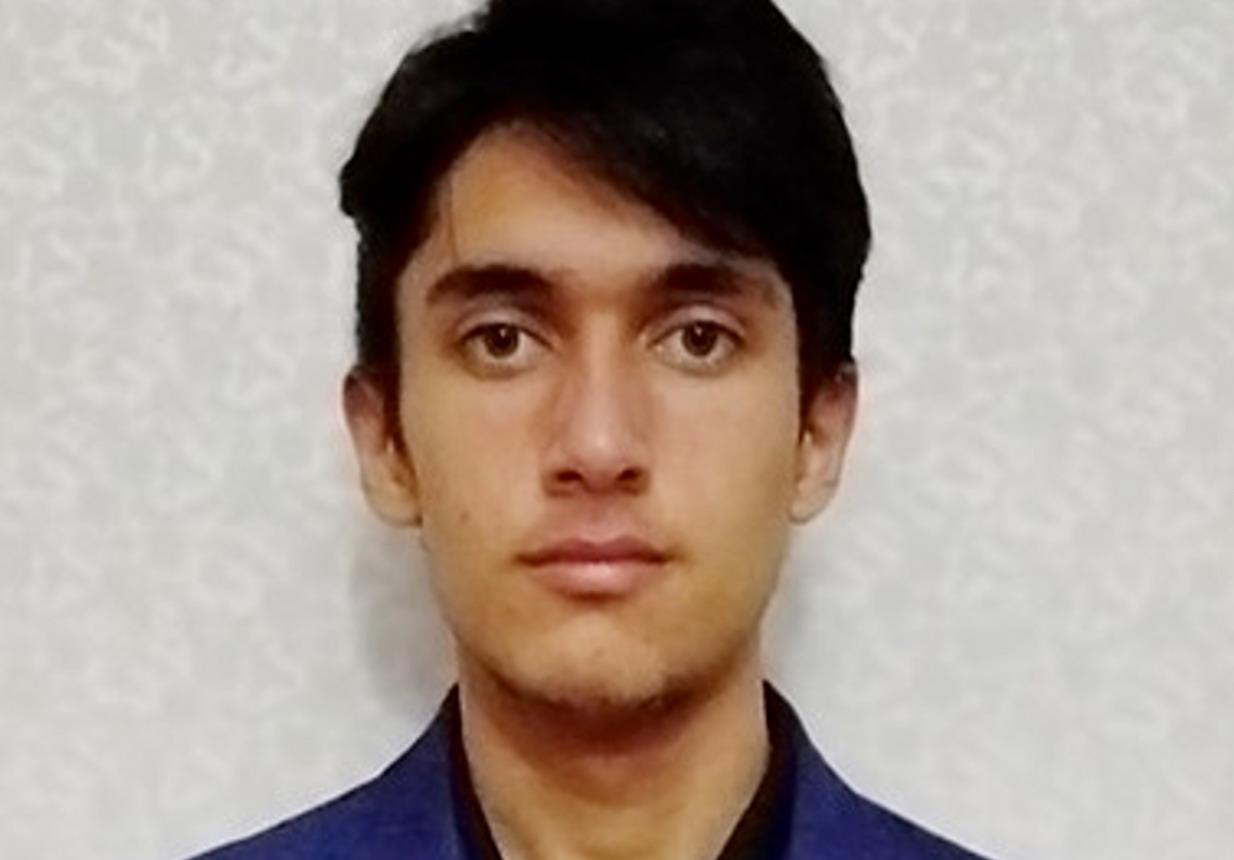
On 26 November, Sheki Appeal Court upheld the conviction of 19-year-old Jehovah’s Witness conscientious objector Elgiz Ibrahimov. After nearly four months in prison, the court changed the rest of his one-year prison term to a suspended sentence. Officials released him in the courtroom. Ibrahimov will remain on probation, cannot change his place of residence without permission and must wear an electronic tag. He must also “prove through his behaviour that he has reformed”.
The Appeal Court panel “believes that the 3 months and 28 days that the Accused was in custody, from 18 February 2025 to 19 February 2025, as well as from 30 July 2025 to the present (26 November 2025), will deter him from committing acts that could lead to the loss of his freedom in the future”, the three Judges wrote in their decision (see below).
Ibrahimov had expressed his willingness to perform an alternative civilian service. The Judges rejected his lawyer’s arguments that the Constitution guarantees the right to alternative civilian service. They also dismissed the argument that the conviction “grossly and intentionally” violates his rights under the European Convention on Human Rights, the International Covenant on Civil and Political Rights and the Universal Declaration of Human Rights (see below).
Jehovah’s Witnesses are conscientious objectors to military service and do not undertake any kind of activity supporting any country’s military. But they are willing to undertake an alternative, totally civilian form of service, as is the right of all conscientious objectors to military service under international human rights law.
Ahead of its accession to the Council of Europe in January 2001, Azerbaijan promised “to adopt, within two years of accession, a law on alternative service in compliance with European standards”. It failed to do so (see below).
On 17 September, the Committee of Ministers of the Council of Europe commented on Azerbaijan’s lack of progress in implementing an alternative to compulsory military service. It noted “with concern” that conscientious objectors “still risk criminal prosecution and other forms of restrictions in particular with regard to travel and employment” (see below).
“Although a signatory to the European Convention on Human Rights since 2001, and despite judgments of the European Court of Human Rights on 17 October 2019 against Azerbaijan in the case of five conscientious objectors, Azerbaijan continues to ignore its accession commitments and ECtHR judgments that recognise the right of religiously-motivated conscientious objection to military service as fully protected under Article 9 of the Convention,” Jehovah’s Witnesses note.
Zahid Oruj, chair of the Human Rights Committee of the non-freely elected Parliament (Milli Majlis), has been following Ibrahimov’s case. “I remember well that a court decision regarding a citizen from Yevlakh District was used as an argument by international organisations,” he told a local news outlet in September. “The Council of Europe accused Azerbaijan over why this [alternative service] law was not adopted and that person could not benefit from it. However, they did not even investigate whether that citizen really wanted to serve in a civilian capacity for three years” (see below).
Oruj did not respond to Forum 18’s questions:
– What happened to the proposals to introduce an Alternative Service Law?
– What progress has the Working Group allegedly set up in the Milli Majlis to draft an Alternative Service Law made, if any?
– Why is there a “danger”, as he put it, of introducing alternative civilian service? (see below).
The regime-controlled Human Rights Ombudsperson’s Office in Baku has not responded to Forum 18’s questions, sent in August, asking what action it is taking (if any) to ensure that Azerbaijan introduces a civilian alternative service for those unable to serve in the army on grounds of conscience (see below).
Telephones at the State Committee for Work with Religious Organisations in Baku went unanswered each time Forum 18 called on 17 December.
A December 2024 amendment to the Migration Code specifically imposed a “temporary” ban on leaving the country for those deemed to have evaded conscription or mobilisation from leaving the country. Yet at least ten Jehovah’s Witness conscientious objectors had been banned from leaving the country in recent years even before the Migration Code amendment was adopted. The ban is generally lifted when they reach the age of 30, the upper age limit for conscription (see below).
Council of Europe obligation ignored
Military service of 18 months (12 months for those with higher education) is compulsory for all young men from the age of 18. Legal amendments in December 2024 reduced the upper age limit for conscription from 35 to 30.
Article 76, Part 2 of Azerbaijan’s Constitution declares: “If the beliefs of citizens come into conflict with service in the army then in some cases envisaged by law alternative service instead of regular army service is permitted.” However, no mechanism exists to enact this provision.
Ahead of its accession to the Council of Europe in January 2001, Azerbaijan promised “to adopt, within two years of accession, a law on alternative service in compliance with European standards and, in the meantime, to pardon all conscientious objectors presently serving prison terms or serving in disciplinary battalions, allowing them instead to choose (when the law on alternative service has come into force) to perform non-armed military service or alternative Civilian service”.
Azerbaijan has never done this, and conscientious objectors to military service have been repeatedly prosecuted and even jailed under Criminal Code Article 321.1. This states: “Evasion without lawful grounds of call-up to military service or of mobilisation, with the purpose of evading serving in the military, is punishable by imprisonment for up to two years [in peacetime]”.
Local human rights defenders and United Nations (UN) human rights bodies, as well as the Council of Europe’s Venice Commission and its European Commission against Racism and Intolerance (ECRI), have repeatedly criticised Azerbaijan’s failure to introduce a civilian alternative to compulsory military service.
In August 2019, the Baku Human Rights Club, which Rasul Jafarov then headed, published its own proposal for the text of an Alternative Service Law to try to put the issue on the public agenda. “We have had no response to our proposal from official people,” Jafarov told Forum 18 in April 2020.
In a report issued on 19 March 2021, the Baku-based Institute for Democratic Initiatives called for an Alternative Service Law to be adopted “in accordance with international standards”. It said “those, who refuse to perform military service because of their beliefs, should be given a chance to engage in alternative service”. It also called for those who had been arrested “in connection with the absence of such legislation and subjected to other such punishments” should be pardoned and the punishments imposed on them lifted.
Jehovah’s Witnesses have repeatedly pressed the authorities to introduce an alternative to compulsory military service. On 4 August 2025, their local and European representatives held an online meeting with officials of the State Committee for Work with Religious Organisations in Baku. “The matters of registration and civil alternative service were discussed,” Jehovah’s Witnesses noted. “However, no progress was made in resolving these issues.”