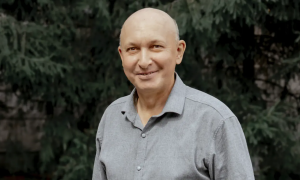
A Russian occupation ‘court’ in Crimea has sentenced 54-year-old Vitaliy Buryk to six years’ imprisonment for remaining true to his faith as a Jehovah’s Witness. Buryk, who was born in Luhansk oblast, had been a believer for 20 years before Russia invaded Crimea in 2014 and swiftly unleashed religious persecution. Although the sentence will certainly be appealed, Vitaliy was taken into custody in the ‘courtroom’.
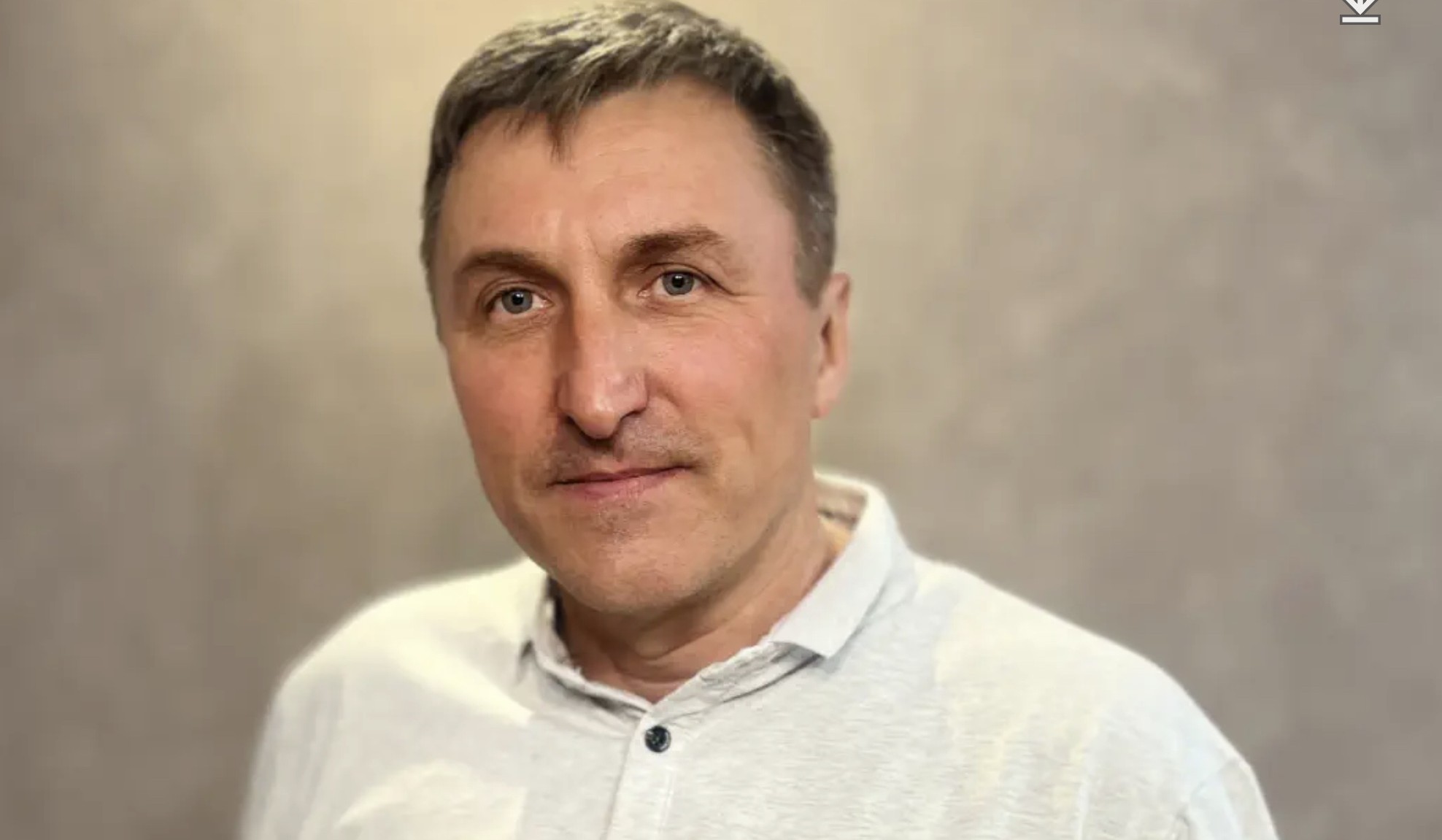
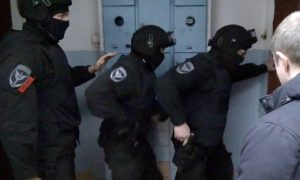
Vitaliy Buryk (b. 7.10.1971) was arrested on 9 October 2024, after armed raids of the homes of at least ten Jehovah’s Witnesses in occupied Kerch. He was charged with ‘organizing the activities of an extremist organization’ under Article 282.2 § 1 of Russia’s criminal code, with the prosecution initiated by A.A. Farimov, a ‘senior investigator’ of Russia’s Investigative Committee.
He was initially held in custody for two days and then placed under house arrest. His imprisonment will be a terrible blow to Vitaliy’s younger daughter who has Down’s Syndrome and had already suffered from the shock after the enforcement officers burst into the family’s home, and then from the restrictions that her father’s house arrest imposed on the family, and the outdoor activities that they had adapted for their daughter’s needs.
Both the charges and the fabricated ‘evidence’ in this case were based solely on a Russian supreme court ruling from 20 April 2017. This outlawed the Jehovah’s Witnesses, claiming that a world faith was ‘an extremist organization’. The ruling, like others regularly passed by this politically subservient ‘court, is used to enable the Russian authorities to violate fundamental principles, not only of international law, but of Russia’s own constitution which, on paper, espouses freedom of conscience. By labelling an internationally recognized faith ‘extremist’, Russia can claim to be ‘fighting extremism’, not engaging in religious persecution. The claim is pitiful, and has received widespread condemnation, but more international pressure is needed, especially since Russia is imposing such repression on parts of Ukraine presently under its occupation.
It was telling that the prosecution’s ‘evidence’ in this profoundly flawed ‘trial’ included the supposed ‘testimony’ of two ‘secret witnesses’ who had, at investigation stage, purportedly asserted that Buryk had continued to practise his faith after the 2017 supreme court ruling. The ‘testimony’ was, in fact, ineptly faked, with both ‘witnesses’ admitting in ‘court’ that they had not seen Buryk since April 2017. When the prosecutor insisted on reading out their supposed written statements, these were essentially identical, down even to linguistic mistakes. Those protocols were very clearly written as ‘proof’ to back the indictment. During her questioning in ‘court’, for example, the female ‘secret witness’ not only confirmed that she had ceased any contact with the Jehovah’s Witnesses in 2017, but stated that before this, she had not been aware of any “organizational structure” in the believers’ community. The written ‘testimony’, however, falsely claimed that Vitaliy Buryk was an ‘elder’ of the community and that he was therefore “a member of the managerial makeup of the organization”.
In his appeal against the house arrest ruling, Buryk wrote that he had ceased any participation in the activities of the local Jehovah’s Witnesses community back in March 2017. “However, as a deep believer, I did not stop practising my faith in Jehovah. This was not, nor can it be prohibited by a court.”
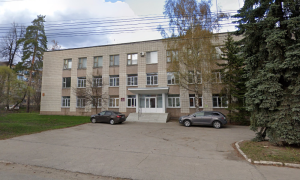
The indictment was passed to the occupation ‘Kerch city court’ in June 2025, with the sentence – six years’ imprisonment in a medium-security prison colony – passed on 19 February 2026 by ‘judge’ Alexander Kovaliov. The latter was clearly in a hurry and rushed through Buryk’s questioning in ‘court’, the debate and final address all in one hearing, with this depriving Buryk of his right to properly prepare his defence.
Russian persecution on occupied territory
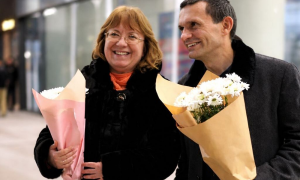
According to the Jehovah’s Witnesses website, 35 believers have faced persecution in occupied Crimea, with 14 sentenced to terms of imprisonment, from six to six and a half years. The first prisoner of conscience, Serhiy Filatov, was recently released from imprisonment, having served a six-year sentence to the last day.
Although Russia’s proxy ‘Donetsk and Luhansk people’s republics’ followed Russia from the outset in outlawing and harassing Jehovah’s Witnesses, the first reported arrest in occupied Donetsk was in August 2025.