Russia’s Supreme Court declared the Jehovah’s Witness Administrative Centre “extremist” and banned its activities in 2017. In the years since then, 887 people have faced criminal prosecution for continuing to meet for prayer and Bible study.
Jehovah’s Witnesses argue that the Supreme Court ruling did not outlaw their beliefs. They point to a February 2021 statement from the Russian Foreign Ministry’s Department for Humanitarian Cooperation and Rights, that the ruling “emphasised that when considering the case, it [Supreme Court] evaluated neither the legality of Jehovah’s Witness religious beliefs, nor the means of expressing them, but only the specific illegal actions of this organisation [the Jehovah’s Witness Administrative Centre and its subsidiaries]”.
So far, over 660 Jehovah’s Witnesses have been convicted, mainly under Criminal Code Article 282.2, Part 1 and Part 2 for organising or leading “the activities of a banned extremist organisation” (three of them posthumously). First-instance courts are known to have handed 206 people prison terms, 333 suspended sentences, 111 fines, and 11 terms of assigned labour. Only one person has so far been acquitted and had this verdict enter and remain in force, while 25 have had the charges against them dropped.
Even before any trial, investigators usually have individuals added to the Federal Financial Monitoring Service (Rosfinmonitoring) “List of Terrorists and Extremists”. This brings many financial consequences including the freezing of bank accounts except in the case of small transactions.
Individuals with suspended sentences and those released from prison often must spend years under various restrictions and obligations.
Most Jehovah’s Witnesses appeal against their convictions, but almost all are unsuccessful. When prosecutors challenge sentences they see as too lenient, a few defendants even receive harsher punishments on appeal than they did in first-instance courts.
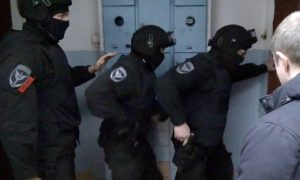
Raids on Jehovah’s Witness homes have continued into 2026. These are usually led by the Investigative Committee or the Federal Security Service (FSB) – the agencies usually responsible for investigations of Jehovah’s Witnesses for “continuing the activities of a banned extremist organisation”. Such raids often involve armed troops of the National Guard (Rosgvardiya).
The United Nations (UN) Special Rapporteur on the situation of human rights in the Russian Federation, Mariana Katzarova, expressed concern about the prosecution on “extremism” charges of Jehovah’s Witnesses and Muslims who read Said Nursi’s works. She called on the regime to: “Immediately cease the abuse of national security, public safety and particularly anti-extremism and counter-terrorism laws against civil society groups”, including religious communities, in her September 2025 report to the UN General Assembly.