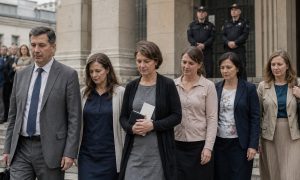
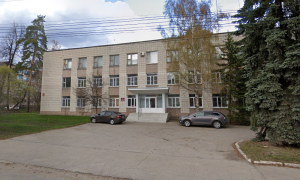
A 28-year-old primary school teacher, a modest financial contribution to a family facing illness, and a criminal conviction under Russia’s anti-extremism legislation. The case of Anna Moroz in Crimea raises serious questions about religious freedom, humanitarian assistance, and the consequences of treating peaceful expressions of faith as criminal activity.

When Faith and Compassion Become Grounds for Prosecution
What happens when helping a struggling family becomes evidence in a criminal investigation? Can a small financial contribution, personal photographs, and wedding congratulations be interpreted as signs of extremist activity? These questions lie at the heart of the prosecution of Anna Moroz, a 28-year-old primary school teacher and one of Jehovah’s Witnesses living in Crimea, who was sentenced on November 12, 2026, by the Simferopol District Court to four years and six months of imprisonment, suspended, after being convicted of participating in and financing the activities of an organization prohibited under Russian anti-extremism legislation. The case attracted attention because the conduct described by Moroz included ordinary religious practices, personal relationships, and a financial contribution of just 2,000 rubles, reportedly intended to help a family experiencing difficulties following illness.
The conviction represents another development in the continuing prosecution of Jehovah’s Witnesses in territories under Russian control. For Moroz, the proceedings meant far more than a criminal judgment: they disrupted her professional career, exposed her private life to investigative scrutiny, restricted her freedom of movement, and placed her future under considerable uncertainty. Her experience illustrates the profound consequences that can arise when religious association, voluntary financial assistance, and personal expressions of faith are examined through the framework of anti-extremism legislation. Beyond the individual circumstances, the case raises fundamental questions about freedom of conscience, the protection of peaceful religious activity, and the responsibility of judicial authorities to distinguish genuine criminal conduct from ordinary expressions of humanity and religious conviction.
A Young Educator Whose Religious Beliefs Encouraged Peace and Respect
Anna Moroz had been familiar with the teachings of Jehovah’s Witnesses since childhood, and she explained during the proceedings that biblical principles had played an important role in shaping her character, relationships, and professional responsibilities. As a primary school teacher, she worked closely with children during a formative stage of their development, encouraging respect for parents and teachers, peaceful conflict resolution, cooperation, kindness, and consideration for others. She maintained that these values helped her establish positive relationships with students, parents, and colleagues, while strengthening her commitment to education and the welfare of children. The accusation of extremism therefore stood in sharp contrast to the peaceful values she described as central to her personal and professional life.
Moroz emphasized that her religious convictions did not encourage hostility, violence, or rejection of society. Instead, she considered her faith a motivation to treat people with dignity, provide assistance when possible, and resolve disagreements without aggression. Her defense highlighted the difference between participating in peaceful religious activities and engaging in conduct that genuinely threatens public safety. She maintained that praying, discussing the Bible, associating with fellow believers, and helping people in need were expressions of conscience rather than criminal acts. Nevertheless, these aspects of her religious and social life became relevant to proceedings that ultimately resulted in a serious criminal conviction.
A Financial Contribution of 2,000 Rubles at the Center of the Case
One of the most controversial elements of the prosecution concerned a transfer of 2,000 Russian rubles, which Moroz reportedly made to assist a family experiencing financial difficulties related to illness. According to the explanation presented in connection with the case, the money was intended as personal humanitarian support rather than funding for illegal organizational activity. Such assistance is common among friends, relatives, neighbors, and members of religious communities, particularly when families face unexpected medical expenses or other hardships. Investigators, however, interpreted the transaction as financial support for an organization classified as extremist, making the payment part of the evidence supporting the criminal accusation.
The essential legal question was whether a payment described as humanitarian assistance could properly be characterized as financing prohibited organizational activity. The existence of a money transfer alone does not establish its purpose, and determining criminal responsibility requires consideration of the surrounding circumstances, the recipient, the intended use of the funds, and the relevant legal requirements. Moroz maintained that her intention was to help people in difficulty, while the prosecution treated the payment as evidence of criminal financing. This disagreement became especially significant because the sum involved was relatively small, yet the resulting conviction carried a sentence measured in years. The case consequently illustrates the importance of distinguishing voluntary assistance to individuals from knowingly financing unlawful activities.
Wedding Congratulations and Family Photographs Enter the Investigation
Another striking aspect of the proceedings was the inclusion of materials belonging to Moroz’s private life. Investigators reportedly examined a decorative wedding canvas containing congratulations and warm wishes from relatives and friends, together with family photographs collected during the investigation. These objects, normally associated with personal memories, family celebrations, and social relationships, became part of the criminal case. Their inclusion raised questions about how investigators interpreted Moroz’s connections with other individuals and what evidentiary significance they attributed to ordinary expressions of friendship and affection.
Family photographs and wedding messages do not, by their nature, establish unlawful activity. Their relevance depends on what they demonstrate and how they relate to the specific criminal allegations. In Moroz’s case, the available information does not establish that these personal items contained threats, calls for violence, or explicit incitement to hatred. Their presence in the investigative materials nevertheless highlights concerns about the extent to which ordinary social and religious relationships can become subject to criminal scrutiny. The issue extends beyond the privacy of one defendant, touching upon the broader protection of family life, freedom of association, and the right to maintain peaceful relationships without unjustified suspicion.
Searches, Interrogations, Restrictions, and the Final Judgment
The criminal investigation formally began on January 26, 2026, under provisions of the Russian Criminal Code addressing participation in extremist organizational activities and financing extremist activity. During February, investigators carried out searches at the homes of two women in the Simferopol district, and Moroz, members of her family, and another believer were taken for questioning. Following these investigative measures, Moroz was subjected to restrictions on leaving her place of residence without authorization, while additional limitations were subsequently imposed during the judicial proceedings. By April, the case had reached the court, where the prosecution maintained that her conduct constituted participation in and financial support for prohibited extremist activity.
On November 12, 2026, Judge Yelena Dybova of the Simferopol District Court found Moroz guilty and imposed a sentence of four years and six months of imprisonment, suspended. Although the sentence did not require immediate imprisonment, it remained a serious criminal punishment with potentially significant personal and legal consequences. At the time of the reported judgment, the decision had not yet entered into legal force. The proceedings demonstrated how an investigation centered on religious activities and financial assistance could develop into a prolonged legal process involving searches, questioning, restrictions, public scrutiny, and the possibility of imprisonment.
The Personal Cost: A Teaching Career Interrupted
The prosecution had a direct impact on Moroz’s professional life, resulting in the loss of her position as a primary school teacher. For a young educator who had dedicated herself to working with children, this consequence represented much more than the interruption of employment. Teaching had allowed her to contribute to the community, develop professional relationships, and apply the principles of patience, mutual respect, and peaceful cooperation that she considered important. Her dismissal therefore affected her livelihood, professional identity, and future opportunities, illustrating the consequences of criminal proceedings even when a defendant is not immediately incarcerated.
Criminal prosecution can create pressures extending well beyond formal punishment. The disruption of employment, uncertainty surrounding future legal decisions, restrictions on personal freedom, and emotional burden placed on relatives and friends may significantly alter everyday life. A suspended prison sentence does not restore a lost career, eliminate the consequences of investigation, or automatically remove the uncertainty associated with a criminal conviction. In Moroz’s case, the loss of her teaching position demonstrated how the application of anti-extremism legislation can affect an individual’s ability to participate in ordinary professional and social life.
A Courtroom Defense Based on Peace, Conscience, and Religious Freedom
During her final statement, Moroz rejected the characterization of her religious activities as extremist conduct and emphasized that her beliefs encouraged compassion, honesty, peaceful behavior, and respect for others. She explained that the biblical principles she followed had helped her become a considerate person and a responsible teacher, while encouraging constructive relationships with those around her. She also expressed gratitude toward her family, friends, legal representative, and others who had supported her throughout the proceedings. Her defense emphasized that peaceful worship, prayer, Bible discussions, and voluntary assistance to people facing hardship should not automatically be equated with dangerous or unlawful conduct.
The central argument of her defense was that peaceful religious conviction is fundamentally different from extremism involving violence, intimidation, or incitement to hatred. Moroz maintained that she had not threatened public safety, encouraged violence, or harmed other people through her religious practices. Her case therefore became a dispute not only over the interpretation of specific actions but also over the boundaries of religious freedom and the protection afforded to individuals who seek to live according to their conscience. The controversy highlights the importance of assessing alleged criminal activity through concrete evidence rather than relying solely on an individual’s religious affiliation.
Russia’s Anti-Extremism Legislation and Jehovah’s Witnesses
The prosecution took place within the broader legal environment established after the Russian Supreme Court’s 2017 decision to dissolve the Administrative Center of Jehovah’s Witnesses and their registered religious organizations, declaring their activities extremist. The decision led to the prohibition of the organizations, the confiscation of religious property, and numerous criminal proceedings against individual believers. Russian authorities have maintained that these prosecutions concern participation in prohibited organizational activity rather than religious belief itself. However, the distinction between peaceful religious practice and unlawful organizational participation has remained a major point of controversy, particularly when cases involve prayer, Bible study, religious gatherings, and personal communication between believers.
International human rights standards recognize freedom of thought, conscience, and religion, including the right to manifest religious beliefs individually or collectively, subject to legally justified and proportionate restrictions. In June 2022, the European Court of Human Rights ruled against Russia in a major case concerning Jehovah’s Witnesses, finding violations of fundamental rights relating to religious freedom, expression, and association. The Court criticized the treatment of peaceful religious activities and called for measures to address prosecutions and imprisonment connected with the exercise of religious freedom. Despite that judgment, criminal cases continued. The prosecution of Moroz therefore reflects an ongoing conflict between Russia’s application of anti-extremism legislation and international principles intended to protect peaceful religious activity.
Crimea and the Wider Consequences for Religious Communities
Moroz’s conviction was not an isolated case. According to figures reported in November 2026, 41 Jehovah’s Witnesses in Crimea had faced criminal prosecution, while nine were serving sentences in penal colonies. Behind these figures are individuals and families experiencing the consequences of searches, investigations, restrictions, imprisonment, and disruptions to employment and everyday life. The pressure associated with repeated prosecutions can also affect entire religious communities, creating uncertainty about whether ordinary worship, religious communication, or assistance between believers may expose individuals to criminal allegations.
The situation in Crimea carries additional international significance because the peninsula remains internationally recognized as part of Ukraine while under Russian control. The application of Russian criminal legislation to residents of Crimea therefore takes place within a complex legal and political environment. Beyond questions of territorial status, however, the human consequences of religious prosecution remain immediate and personal. The possibility that peaceful religious relationships may become the subject of criminal investigations raises concerns about freedom of conscience, family security, social participation, and the protection of fundamental human rights.
The Difference Between Preventing Extremism and Punishing Peaceful Faith
Governments have a legitimate responsibility to prevent terrorism, violence, criminal extremism, and activities that genuinely threaten public safety. Nevertheless, criminal enforcement must distinguish between dangerous conduct and peaceful expressions of religious belief. Prayer, religious discussion, voluntary humanitarian assistance, and personal association do not automatically constitute extremism simply because participants belong to a religious community whose registered organizations have been prohibited. The application of criminal law requires careful assessment of individual responsibility, the nature of the alleged conduct, and the evidence establishing the necessary elements of an offense.
The case of Anna Moroz raises the fundamental question of whether religious association and personal compassion can be treated as criminal behavior without demonstrating a genuine connection to prohibited activity. A contribution to a family facing illness, photographs from private life, and messages of goodwill may have entirely innocent explanations. Their legal significance must therefore be evaluated through clear evidence and the specific requirements of criminal law. The broader principle is one that extends beyond any single religious denomination: individuals should be able to practice their beliefs peacefully, maintain personal relationships, and help people in need without unjustified interference or disproportionate criminal consequences.
A Young Teacher’s Conviction Raises Questions That Extend Far Beyond Crimea
The prosecution and conviction of Anna Moroz bring together several deeply significant issues: religious freedom, humanitarian assistance, individual conscience, judicial responsibility, and the personal consequences of criminal accusations. A 28-year-old teacher whose religious beliefs encouraged kindness, respect, and peaceful conduct found herself facing a serious criminal case in which a modest financial contribution, personal relationships, and religious activities became subjects of investigation. The resulting suspended sentence of four years and six months, together with the loss of her teaching position, demonstrates how profoundly such proceedings can affect a person’s present circumstances and future prospects.
What makes this case particularly disturbing is the contrast between the peaceful conduct described by Moroz and the seriousness of the allegations brought against her. While governments are entitled to investigate genuine criminal activity, the legitimacy of criminal enforcement depends on the ability to distinguish unlawful conduct from ordinary expressions of faith, friendship, and compassion. When humanitarian assistance becomes evidence of extremist financing, and personal relationships are examined as potential indicators of criminal participation, questions inevitably arise about proportionality, legal certainty, and the protection of fundamental freedoms.
The broader experience of Jehovah’s Witnesses in Russia and Crimea shows that these concerns are not confined to a single investigation. Repeated prosecutions have affected individuals, families, livelihoods, and religious communities, while international judicial findings have challenged the compatibility of restrictions on peaceful religious practice with established human rights protections. Moroz’s case offers another example of the human consequences of this unresolved conflict, reminding observers that questions of religious liberty are not merely theoretical disputes between governments and courts but realities that directly influence people’s lives.
A legal system must be capable of confronting genuine extremism without treating peaceful religious belief as a threat in itself. Justice is measured not only by the punishment of wrongdoing but also by the protection of those whose conduct does not warrant criminal sanction. The story of Anna Moroz ultimately raises a question that concerns every society committed to human dignity and freedom of conscience: if an individual can face years of criminal punishment in connection with a modest act of assistance and the peaceful practice of faith, how securely are the fundamental rights of ordinary people protected?
When compassion is interpreted as criminal financing and peaceful worship becomes grounds for prosecution, the distinction between protecting society and restricting fundamental freedoms becomes critically important. The case of Anna Moroz is a powerful reminder that freedom of religion, individual conscience, and the right to help others must remain meaningful protections in everyday life—not merely principles declared on paper.