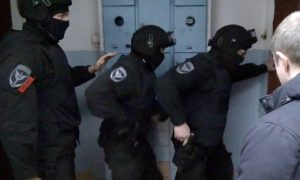
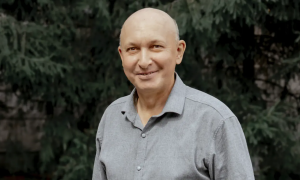
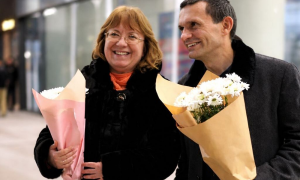
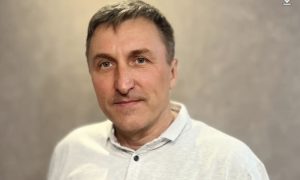
The FSB raided at least four Jehovah’s Witness households in Dimitrovgrad in Ulyanovsk Region early on 3 February. Masked officers knocked down Zhanna Popova when she answered the door. An officer struck her 60-year-old husband Igor Popov in the back, “forcibly twisting his neck”, apparently to make him give up his computer password. At the local FSB headquarters, Popov was handcuffed, stripped, beaten, and “repeatedly subjected to electric shocks”. An investigator forced him to sign a prepared statement “incriminating himself”. Officials have not answered Forum 18’s questions about the torture.
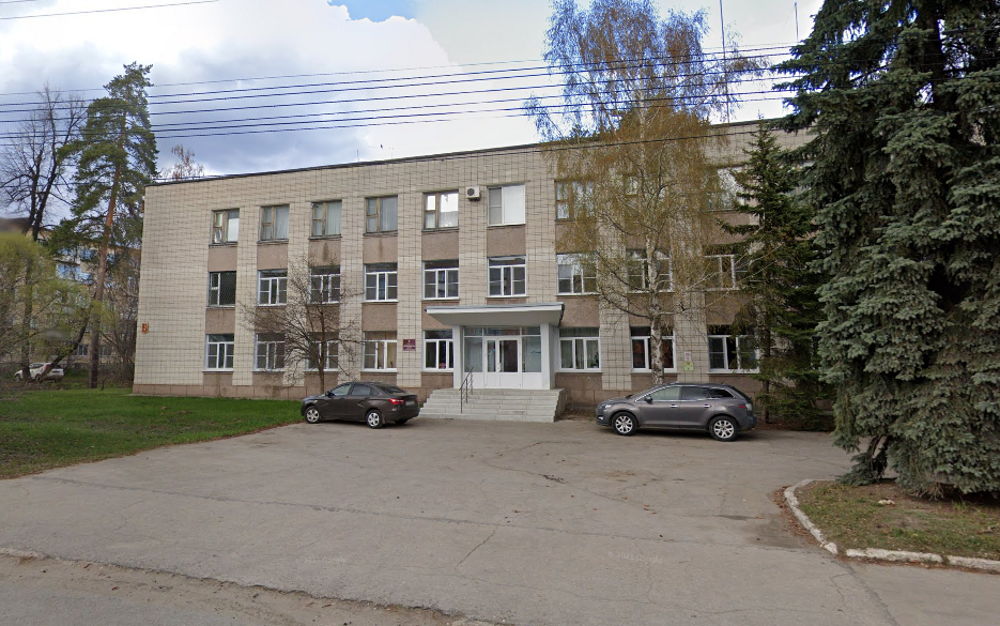
On 3 February, officers of the Federal Security Service (FSB) assaulted a number of Jehovah’s Witnesses during raids on their homes in Dimitrovgrad in Ulyanovsk Region. Officers subjected at least two of them to torture. Investigators subsequently charged four people with organising or participating in “the activities of a banned extremist organisation” for continuing to meet for worship.
One of the masked officers knocked down 57-year-old Zhanna Popova when she answered the door early in the morning, injuring her knee. During the search of their home, one FSB officer forced her 60-year-old husband Igor Popov onto the floor. The officer struck him in the back, “forcibly twisting his neck”, apparently in an attempt to make him give up his computer password (see below).
After completing the search, the FSB personnel took Popov to the local FSB headquarters, where he was handcuffed, stripped, beaten, and “repeatedly subjected to electric shocks”. An investigator then forced him to sign a prepared statement “incriminating himself” and agree to cooperate with the investigation (see below).
Popov and his wife have lodged complaints about their treatment to prosecutors and other state agencies, but have so far received no response, according to Jehovah’s Witness lawyers (see below).
After raiding and searching his home the same morning, FSB investigators began questioning Igor Balashov at about midnight, after refusing him food, water, and the medication he needed for chronic illnesses for approximately 20 hours. “As a result, during interrogation, his blood pressure spiked, half of his face went numb, and he began to suffer tremors,” according to the European Association of Jehovah’s Witnesses. Investigators forced him to sign a statement (see below).
Forum 18 wrote to the Ulyanovsk Region branch of the FSB to ask:
– why it had considered it necessary to use physical force against the Jehovah’s Witnesses;
– why investigators had allegedly used a stun gun on one man during interrogation;
– and whether the personnel involved had been suspended from duty or placed under investigation.
Forum 18 has received no response (see below).
Forum 18 also sent written enquiries to Ulyanovsk Region Prosecutor’s Office, the Ulyanovsk Region Investigative Committee, the Federal Investigative Committee, and both federal and regional human rights commissioners, asking whether an investigation had been opened and whether the officers involved in the torture had been suspended. The regional prosecutor’s office and regional human rights commissioner responded, but did not answer Forum 18’s questions (see below).
National Guard (Rosgvardiya) troops usually accompany the FSB and other investigative agencies when they arrest Jehovah’s Witnesses and search their homes. The Ulyanovsk branch of Rosgvardiya, however, did not participate in the Dimitrovgrad raids, Olga Bogatova, head of the service’s press office, told Forum 18 (see below).
In 2025 alone, “at least eight cases of unmotivated violence and cruelty against Jehovah’s Witnesses occurred (including those falling under the definition of torture as defined in the UN Convention)”, the European Association of Jehovah’s Witnesses noted (see below).
In November 2025, the Investigative Committee in Krasnodar Region arrested independent Orthodox priest Fr Iona Sigida. During interrogation, investigators beat him, forcibly shaved his hair and beard, and shocked him with a stun gun (see below).
Under the United Nations Convention against Torture and Other Cruel, Inhuman or Degrading Treatment or Punishment, Russia is obliged both to arrest any person suspected on good grounds of having committed, instigated or acquiesced to torture “or take other legal measures to ensure his [sic] presence”, and also to try them under criminal law which makes “these offences punishable by appropriate penalties which take into account their grave nature” (see below).
In the years since the 2017 Supreme Court ban, nearly 900 Jehovah’s Witnesses have faced prosecution for continuing to meet for prayer and Bible study. Courts continue to hand down long jail terms. Among recent convictions, Roman Makhnyov and Dmitry Kuzin were each sentenced to 6 years and 6 months’ imprisonment on 13 March (see below).
Frequent reports of torture
Officials are known to have inflicted torture on detainees and prisoners of conscience – including Jehovah’s Witnesses – during interrogations and in prison system institutions. In pre-trial detention centres and correctional colonies, prisoners of conscience also face the danger of assault and torture at the hands of fellow inmates, which prison staff may permit or overlook.
In 2025 alone, “at least eight cases of unmotivated violence and cruelty against Jehovah’s Witnesses occurred (including those falling under the definition of torture as defined in the UN Convention)”, the European Association of Jehovah’s Witnesses noted in their report on the year.
“Over 70 believers have been subjected to cruel treatment” since the 2017 nationwide ban on Jehovah’s Witness communities as an “extremist organisation”, they added, with none of the perpetrators being subsequently investigated or punished.
Jehovah’s Witnesses who have faced torture include:
– Mikhail Proshenkov, whom Rosgvardiya officers shocked with a stun gun while searching his home in Saratov in September 2025;
– Anna Safronova, whom prison staff repeatedly forced to stand for up to 13 hours in an empty room in her prison colony in March 2025;
– Rinat Karimov, who was tortured by fellow inmates at a prison system medical facility in April 2024;
– Roman Makhnyov (see below), whom FSB officers left standing handcuffed to a heating pipe overnight before his interrogation in June 2019, during which he was denied food for two days;
– and seven men from Surgut in western Siberia, who were hooded, beaten, and given electric shocks after their arrests in February 2019.
One Muslim prosecuted for meeting to read Nursi’s works, Yevgeny Kim, reported in 2015 that he had been tortured by fellow inmates while in detention awaiting trial in Blagoveshchensk, and had suffered broken ribs.
In November 2025, the Investigative Committee in Krasnodar Region arrested independent Orthodox priest Fr Iona Sigida on charges of “Dissemination of information expressing overt disrespect for society about days of military glory and commemorative dates of Russia associated with the defence of the Fatherland” (Criminal Code Article 354.1, Part 4). During interrogation, investigators beat Fr Iona, forcibly shaved his hair and beard, and shocked him with a stun gun, a church member told Forum 18 a few days later.
Russia’s obligations under Convention against Torture
Russia is a party to the United Nations Convention against Torture and Other Cruel, Inhuman or Degrading Treatment or Punishment. This defines torture as “any act by which severe pain or suffering, whether physical or mental, is intentionally inflicted on a person for such purposes as obtaining from him or a third person information or a confession, punishing him for an act he or a third person has committed or is suspected of having committed, or intimidating or coercing him or a third person, or for any reason based on discrimination of any kind, when such pain or suffering is inflicted by or at the instigation of or with the consent or acquiescence of a public official or other person acting in an official capacity.”
Under the Convention, Russia is obliged both to arrest any person suspected on good grounds of having committed, instigated or acquiesced to torture “or take other legal measures to ensure his [sic] presence”, and also to try them under criminal law which makes “these offences punishable by appropriate penalties which take into account their grave nature”.
On 29 September 2025, Russia formally withdrew from the Council of Europe’s European Convention for the Prevention of Torture and Inhuman or Degrading Treatment or Punishment. The European Union’s European External Action Service called this “one more step in Russia’s complete disengagement from its international commitments and clearly demonstrates Russia’s disregard for the protection of human rights”.