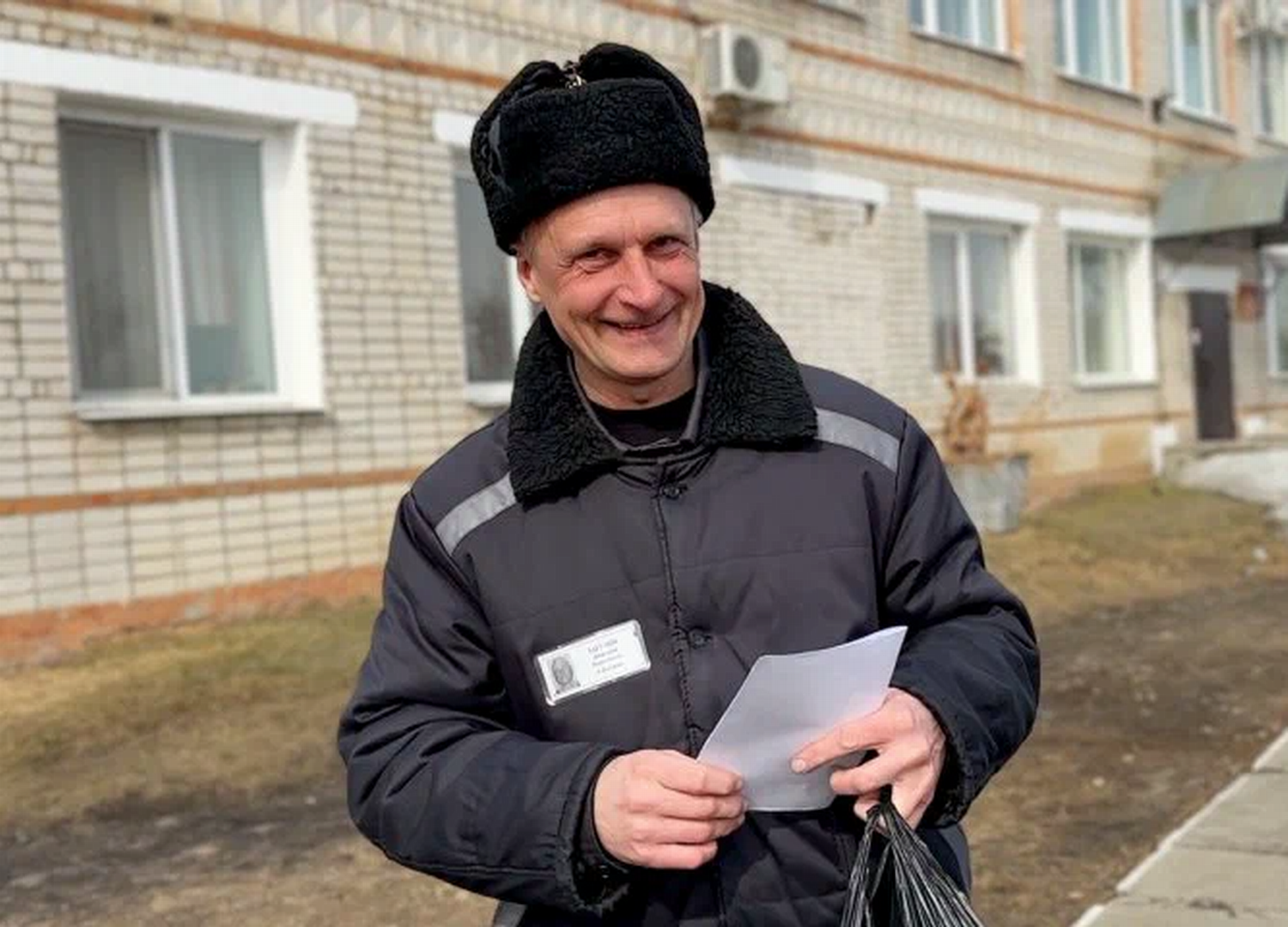
In the long and troubled story of religious persecution in modern Russia, the release of Dmitriy Zagulin stands as both a deeply human moment and a stark reminder that freedom can arrive carrying the weight of continued control. On March 27, 2026, Zagulin, one of Jehovah’s Witnesses prosecuted in connection with worship activity in Birobidzhan, walked out of Penal Colony No. 8 in Blagoveshchensk after spending 1,191 days in custody. His release marked the end of one phase of punishment, but not the end of state pressure. According to the report, he had been convicted alongside three fellow believers for participating in religious meetings that investigators treated as the “organization of the activities of an extremist organization.”
What makes his story especially striking is not only the severity of the sentence, but the contrast between the allegations and the life he had led before the case. The article presents Zagulin as a longtime railway worker whose service was valued by his employer, a man whose ordinary professional life was shattered by a sweeping law enforcement campaign. From that moment onward, his path was reshaped by criminal prosecution, frozen bank accounts, the loss of his job, imprisonment, and strict post-release restrictions. Yet throughout the account, the central thread is his refusal to surrender emotionally. Rather than describing only suffering, the article depicts a man trying to preserve dignity, discipline, and spiritual conviction under pressure.
His case also fits into a broader pattern. The same report links his imprisonment to a larger crackdown that began in Birobidzhan in May 2018, when a major FSB operation targeted more than 20 Jehovah’s Witness families. The case later resulted in prison sentences ranging from 3.5 to 7 years for several defendants. In that wider context, Zagulin’s release is not simply an individual event. It is part of a continuing legal and human rights controversy surrounding the treatment of Jehovah’s Witnesses in Russia since the 2017 liquidation of their legal entities by the Russian Supreme Court.
A Life Upended by a Faith-Based Prosecution
Before the prosecution, Dmitriy Zagulin had spent years working for Russian Railways, where, according to the article, he was respected by management and repeatedly praised for conscientious work. That portrait matters because it emphasizes how abruptly his life changed. In May 2018, a large-scale security operation in Birobidzhan, reportedly involving about 150 officers, marked the beginning of the ordeal for many local Jehovah’s Witnesses. What authorities described as an anti-extremism operation became, in practice, the opening act of a criminal case against believers accused over their religious gatherings.
Ten months after that operation, a criminal case was opened against Zagulin. The prosecution did not remain confined to a courtroom file. It spread into every area of daily life. The report states that he was added to the Rosfinmonitoring list, which led to his bank accounts being frozen, and that in November 2021 he lost his job. By December 2022, he was sentenced to three and a half years in a penal colony and taken into custody directly from the courtroom. These details underscore how prosecution in such cases can function not merely as a legal process, but as a total disruption of livelihood, social stability, and personal security.
The article frames this prosecution as punishment for worship itself. It says Zagulin and the other defendants were convicted for taking part in religious services, actions investigators interpreted through Article 282.2 and related provisions concerning extremism. In the report’s telling, the state did not accuse them of violence, theft, or public danger in the ordinary sense. Rather, the state treated collective religious life as criminal continuation of a banned organization. That legal framing is at the heart of why the case remains so controversial.
Endurance Behind Prison Walls
One of the most memorable elements in the article is Zagulin’s own description of how he understood what was happening to him. He said that he and others faced those events “with smile on our faces,” not because the experience was easy, but because they believed they were suffering for God’s name rather than for ordinary crimes. The wording, even in machine-translated form, reveals the psychological lens through which he endured the ordeal: not as a collapse of meaning, but as a test of faith.
According to the report, he served his sentence in Penal Colony No. 8 in Blagoveshchensk. Communication with the outside world was limited to visits and occasional letters, which is presented as one of the many difficulties of prison life. Yet the article stresses that his greatest survival tool was not access to comfort, but his attitude. He reportedly believed that self-pity made imprisonment unbearable, whereas adapting to circumstances made endurance possible.
That adaptation took concrete form in routine. The report says he tried to wake according to Birobidzhan time, at 4 a.m. local time, exercised regularly, and spent weekends in the library. These may seem like small details, but in narratives of imprisonment they are often the architecture of survival. Routine becomes resistance to chaos. Physical exercise becomes a defense against despair. Reading becomes a way of preserving inner freedom where outer freedom has been stripped away. In that sense, the article presents Zagulin not merely as someone who waited out a sentence, but as someone who tried to remain mentally and spiritually active inside confinement.
Freedom, But Not Full Freedom
The article makes clear that release did not mean a full return to normal life. By court decision, Zagulin was placed under administrative supervision for eight years. During that period, he must report to police four times a month. He is forbidden from leaving Birobidzhan, barred from being outside his home between 10 p.m. and 6 a.m., and prohibited from visiting cafés and restaurants. These conditions show that, even after serving his prison term, the state continues to regulate his movement and daily existence in a highly intrusive way.
This post-release regime gives the story a sharper edge. The formal prison sentence may have ended, but the logic of punishment continues. Administrative supervision of this kind effectively extends state control into civilian life, limiting spontaneity, mobility, and social participation. In practical terms, it means that the transition from prisoner to free citizen remains incomplete. The article therefore presents his release not as a clean restoration of liberty, but as a partial and conditional freedom.
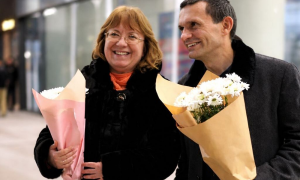
Even so, Zagulin’s response in the article is marked not by bitterness but by emotional relief and anticipation. He says he feels “wonderful,” is overwhelmed with emotion, and is eager to reunite with family and friends. One simple wish stands out: he wants to eat ice cream, something he had apparently gone without for a long time. The power of that detail lies in its ordinariness. After years of penal confinement, freedom is expressed not in grand declarations, but in small human pleasures: sitting with friends, talking, encouraging one another, and reclaiming everyday life.
The Wider Case in Birobidzhan
The article also places Zagulin’s story within the broader “Case of Aliyev and Others in Birobidzhan.” It reports that the 2018 operation in the Jewish Autonomous Area marked the beginning of persecution affecting more than 20 Jehovah’s Witness families. Zagulin, along with Alam Aliyev, Valeriy Kriger, and Sergey Shulyarenko, was accused of extremism for conducting worship services. The men spent more than five months in pretrial detention, and in December 2022, after more than two years of hearings, they were sentenced to terms ranging from 3.5 to 7 years in a penal colony.
The report further notes that appeal proceedings reduced only the harshest sentence, that of Kriger, by three months, and that the effects of the prosecution extended beyond the men themselves. It says the wives of three of the convicted believers were also subjected to criminal prosecution. This broader detail deepens the sense that the case was not experienced as an individual legal dispute, but as collective pressure reaching into households and families.
At the structural level, the article links these cases to the 2017 ruling by the Russian Supreme Court liquidating all 396 registered Jehovah’s Witness organizations in the country and confiscating hundreds of religious buildings. It also points to a 2022 ruling by the European Court of Human Rights that, according to the report, exonerated Jehovah’s Witnesses, ordered Russia to halt criminal prosecutions, and required compensation for harm caused. Whether viewed from a legal, political, or religious freedom perspective, the report places Zagulin’s case within a far larger confrontation over the status of peaceful religious activity in Russia.
Dmitriy Zagulin’s release is, on its surface, a story about one man walking out of prison. But in substance, it is about much more: the collision between conscience and state power, the endurance of belief under coercion, and the unsettling reality that punishment can outlive imprisonment. The article portrays a man who lost years of his life not because of violence or corruption, but because his worship was interpreted as extremism. It describes the cost in concrete terms: detention, financial restrictions, dismissal from work, penal colony confinement, and long-term administrative oversight after release.
What gives the story its emotional force, however, is not only injustice but composure. Zagulin emerges from the article as someone who chose structure over collapse, gratitude over resentment, and hope over defeat. His longing to reconnect with loved ones, to sit with friends, and even to enjoy something as simple as ice cream turns the abstract language of legal persecution into something intimate and unmistakably human.
In that sense, this is not merely a report about release from a penal colony. It is a portrait of resilience under a system that appears determined to keep believers under pressure even after prison gates open. The article’s deeper message is that confinement does not always break conviction, and that even a heavily restricted freedom can still be met with gratitude, emotion, and resolve. Zagulin’s story, as presented here, becomes both testimony and warning: testimony to personal endurance, and warning that when peaceful worship is criminalized, the damage reaches far beyond the courtroom