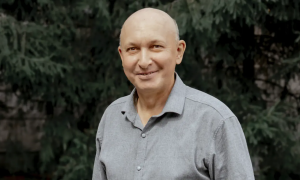
A court in Adygea found Alexey Dmitriev and Yury Sergeyechev guilty of inciting a local resident to join an extremist organization. Both Jehovah’s Witnesses* and their defense team called the extremism charges unfounded.

As reported by the “Caucasian Knot,” in July, investigators referred to court the case of Jehovah’s Witnesses* from Adygea, Alexey Dmitriev and Yury Sergeyechev, accused of involving a person in the activities of an extremist organization.
On April 29, the homes of 57-year-old Alexey Dmitriev and 74-year-old Yury Sergeyechev were searched. Both were detained and sent to pretrial detention. According to investigators, Dmitriev and Sergeyechev did not cease the religious organization’s activities after it was designated extremist in 2017, but “continued to recruit city residents.” According to case materials, from June 2021 to December 2024, they regularly met with a local resident, “persuading him to participate in the organization’s activities.” Human rights activists have recognized both believers as political prisoners.
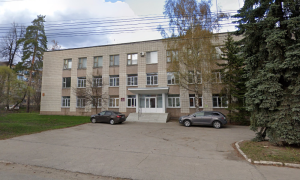
The Teuchezhsky District Court found Alexei Dmitriev and Yuri Sergeyechev guilty under Part 1.1 of Article 282.2 of the Russian Criminal Code , reports a website covering the persecution of Jehovah’s Witnesses* in Russia.
Dmitriev was sentenced to four years in a general regime penal colony, and Sergeyechev to four years of suspended imprisonment.
Both believers have been in custody since April, with 74-year-old Yuri Sergeyechev, a disabled person with diabetes, walking with a cane, and two He had suffered heart attacks and frequent hypertensive crises. He was released from pretrial detention on bail only the day before the sentencing.
During the searches, Dmitriev’s 90-year-old mother and Sergeyechev’s wife suffered hypertensive crises. Yuri Sergeyechev himself was discharged from a day hospital several days before his arrest, where he had been receiving treatment for angina and hypertension. Both men had state-appointed lawyers. Dmitriev’s state-appointed defense attorney offered him to plead guilty.
The charges were based on audio recordings of conversations made by a man who feigned an interest in the Bible. According to the believers, this man initiated conversations and repeatedly asked to discuss the Bible with him.
The defense argued that the case materials contained no incitement to hatred or violence, but the prosecutor requested five years in prison for Yuri Sergeyechev and six years for Alexey Dmitriev.
Yuri Sergeyechev told the court that the prosecution presented no real evidence of a crime and that none of the witnesses had negatively characterized him. Alexey Dmitriev, for his part, emphasized that extremism is incompatible with his beliefs, as Jehovah’s Witnesses* do not participate in political struggles, do not bear arms, and maintain a peaceful disposition. Dmitriev also asked the court to take into account his 90-year-old mother’s need for care, the publication stated.
According to the case file on the district court’s website, the verdict in the Dmitriev and Sergeyechev case was handed down on December 22. Judge Aslenbech Trakhov. “The verdict was handed down,” the “Result of the trial” column states. As of 8:27 a.m. Moscow time on December 26, the text of the verdict has not been published.
As a reminder, back in October 2021, the plenary session of the Supreme Court of Russia ruled that individual or collective religious practice, religious rites, and ceremonies should not in themselves be considered the activity of an extremist organization unless they contain elements of extremism. However, in practice, state prosecutors ignore this decision, noted Yaroslav Sivulsky, a representative of the European Association of Jehovah’s Witnesses.
Earlier, in October 2020, a court in Kabardino-Balkaria acquitted local Jehovah’s Witness* Yuri Zalipaev, who was accused of inciting extremism. In September 2021, the court awarded him 500,000 rubles in compensation, and the prosecutor apologized to the believer for the criminal prosecution. Acquittals for Jehovah’s Witnesses* are rare in the Russian judicial system, Yaroslav Sivulsky commented on the court’s decision at the time.
On April 20, 2017, the Supreme Court of Russia, following a lawsuit filed by the Ministry of Justice, declared the Administrative Center of Jehovah’s Witnesses in Russia* and its 395 branches extremist organizations, banning their activities. The “Caucasian Knot” covers the consequences of this ban on its thematic page “Ministry of Justice vs. Jehovah’s Witnesses*”.
We have updated our apps for Android and IOS! We would be grateful for criticism and ideas for development both in Google Play/App Store and on KU pages in social networks. Without installing a VPN, you can read us on Telegram (in Dagestan, Chechnya and Ingushetia – with VPN). Using a VPN, you can continue reading “Caucasian Knot” on the website as usual, and on social networks: Facebook**, Instagram**, “VKontakte”, “Odnoklassniki” and X. You can watch the “Caucasian Knot” video on YouTube. Send messages to +49 157 72317856 on WhatsApp**, to the same number on Telegram, or write to @Caucasian_Knot.
* 396 Russian Jehovah’s Witness organizations have been designated as extremist, and their activities in Russia have been banned by court order.