A South Korean court ruling has brought renewed attention to the rigid legal boundaries surrounding alternative military service, highlighting the difficult intersection of conscience, family responsibility, military obligation and the limits of judicial intervention. In a case that touches not only on administrative law but also on deeper questions of fairness and constitutional rights, the court refused the request of a Jehovah’s Witness serving in the country’s alternative service system to commute from home rather than remain under the residential conditions tied to his assignment.
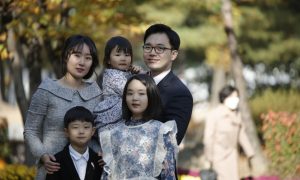
The case is significant because it was not merely about convenience or personal preference. At its heart was a father’s attempt to reconcile compulsory national service with the demands of caring for his young daughter. The plaintiff argued that, since some categories of military-related service in South Korea allow personnel to commute from home with permission, the same flexibility should be extended to those in alternative service. He framed the issue as one of equal treatment under the Constitution, maintaining that the existing system places alternative service personnel at a disadvantage compared with others fulfilling state-mandated duties.
Yet the court took a narrower legal view. Rather than embracing the broader constitutional argument, it found that the current legal framework governing alternative service simply does not provide such an exception. In effect, the judges concluded that neither the Justice Ministry nor the relevant authorities had the legal discretion to authorize home commuting outside what the law expressly allows. The result was a firm reaffirmation of the idea that where the statute is silent, the administration cannot create exceptions on its own.
This ruling therefore carries weight far beyond one individual dispute. It raises broader questions about how alternative service is structured, how far equality arguments can go when compared with other forms of compulsory service, and whether the law is equipped to reflect real-life family obligations faced by those required to serve. It also shows that even when courts recognize the human hardship behind such claims, they may still refuse relief if lawmakers have not written flexibility into the statute itself.
The Background of the Case
The plaintiff had been serving alternative service at Hwaseong Vocational Training Prison since October 2023. His personal circumstances changed significantly when his partner gave birth to their daughter in September 2024. In May 2025, he sought permission from the authorities to commute to his service assignment from home so he could continue serving while also helping care for his child.
His request drew on provisions found in South Korea’s Military Service Act, particularly rules applied to other service categories that can, under certain conditions, permit personnel to live outside their assigned facilities. In particular, the argument referenced the structure used for full-time reserve service, a form of service in which eligible personnel may commute from home instead of living full-time on base. The plaintiff’s position was, in essence, that similar principles should be interpreted to apply to alternative service when family circumstances justify it.
That request, however, was rejected by the authorities. The Justice Ministry maintained that the legal system governing alternative service includes no provision allowing assigned personnel to commute from locations other than the facility or camp tied to their service placement. From the administration’s perspective, the matter was not one of balancing sympathy against discipline, but one of strict statutory limitation.
The Plaintiff’s Argument
The man’s legal challenge rested on the principle that alternative service personnel should not be treated less favorably than others carrying out compulsory service duties. He argued that denying him the ability to commute from home amounted to unequal treatment when compared with those serving in active-duty or supplementary frameworks that allow more flexibility in residential arrangements. He therefore claimed the system violated Article 11 of the Constitution, which guarantees equality.
The case also touched on the constitutional value of family life. By asking to commute rather than be excused from service altogether, the plaintiff appeared to be presenting a more limited and practical request: he was not seeking to evade his obligations, but to perform them in a way that would let him participate in raising his child. That gave the case a broader human dimension, because it placed military duty and parental responsibility in direct tension.
At a deeper level, the lawsuit reflected a recurring challenge in systems of compulsory national service: whether legal categories created for administrative order can adequately respond to the realities of modern family life. The plaintiff’s claim suggested that the law, as currently written, may impose a disproportionate burden on those in alternative service, especially when compared with other groups given more room for accommodation. This was the constitutional and moral force behind the case, even if the court ultimately declined to accept it.
The Court’s Decision
The Seoul Administrative Court dismissed the lawsuit and effectively ended the case without reaching a favorable ruling for the plaintiff on the substance of his request. According to the court, the response given by the authorities was not the kind of administrative disposition that could properly be challenged through appeal litigation seeking cancellation. In simple terms, the judges found that the lawsuit itself was legally improper in form.
Beyond that procedural point, the court also sided with the Justice Ministry’s interpretation of the law. It held that the Act on Assignment to and Performance of Alternative Service contains no exception allowing alternative service personnel to commute from outside their assigned camp or institutional setting. Because the statute does not grant such authority, the ministry could not be said to possess discretion to approve the request.
The court also rejected the broader constitutional criticisms. It concluded that the alternative service framework could not be regarded as violating the principle against excessive restriction, nor could it be said to infringe basic rights or violate constitutional protections relating to equality and family life. In other words, the judges found that the system, however restrictive, remains within the boundaries of constitutionality as currently understood under the law.
Why the Ruling Matters
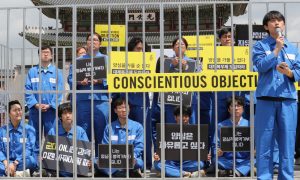
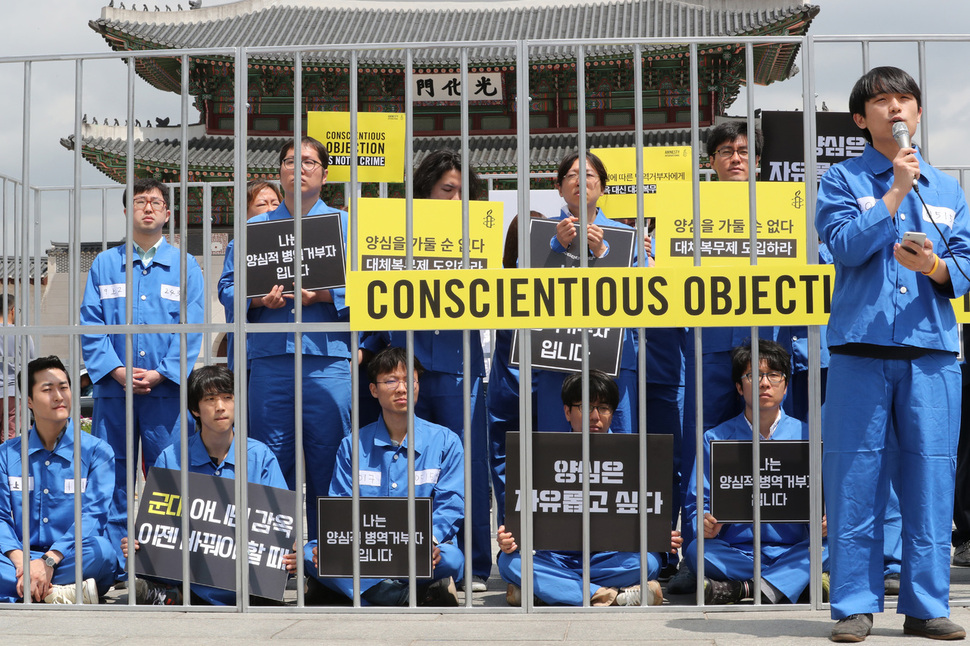
This decision matters because it underscores how tightly regulated South Korea’s alternative service system remains, especially for conscientious objectors such as Jehovah’s Witnesses who enter this pathway instead of conventional military service. The court’s ruling signals that any major relaxation of living conditions or service arrangements is unlikely to come through administrative interpretation alone; instead, it would probably require explicit legislative reform.
It also reveals the narrow room courts often have when faced with emotionally compelling circumstances. A judge may understand the human stakes of a father wanting to help care for his infant daughter, yet still conclude that relief is impossible if the relevant law leaves no opening. That is one of the enduring tensions in administrative justice: the difference between what may feel fair in lived experience and what is authorized in statutory text. This broader implication is an inference from the court’s reasoning and the facts described in the case.
The case may also fuel renewed debate in South Korea over whether the framework for alternative service is too rigid in comparison with other service categories. If lawmakers or civil society groups decide the current model fails to account for legitimate family obligations, the next battleground is likely to be legislative rather than judicial. The court, in effect, appears to have said that the solution—if one is to come—must be written by lawmakers, not improvised by administrators or created by judges through interpretation. This is a legal inference based on the ruling’s emphasis on the absence of statutory exceptions.
In the end, the ruling stands as a sobering reminder that the law can recognize hardship without remedying it. A man performing alternative service sought not exemption, not privilege, and not escape from his national duty, but a more flexible arrangement that would let him remain present in the life of his child. The court nevertheless concluded that the legal system, as currently constructed, leaves no room for such an accommodation.
The broader impact of the decision lies in the message it sends about the structure of alternative military service in South Korea: the system remains bound by strict legislative design, and those serving under it cannot expect the same living arrangements granted in other categories unless the law expressly says so. For conscientious objectors and others following the alternative-service path, this is more than a technical legal detail—it is a reminder that their service framework remains defined by narrow rules and limited flexibility.
At the same time, the case leaves behind an uncomfortable public question. Should a system created to accommodate conscience also be capable of accommodating family responsibility? The court has answered only what the law presently allows. It has not settled what the law ought to become. And that distinction may prove to be the most important legacy of this decision, because it shifts the next chapter of the debate away from the courtroom and toward lawmakers, policymakers and society itself.