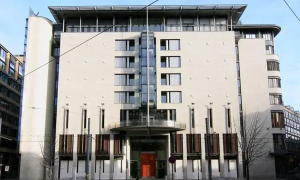
In a ruling with major implications for religious liberty, state neutrality, minority faith communities, and the limits of government intervention in internal religious life, Norway’s Supreme Court has ruled in favour of Jehovah’s Witnesses and overturned state decisions that had stripped the religious community of registration and denied it public subsidies. The decision closes a long and highly sensitive legal battle that began after objections were raised against the community’s internal disciplinary practices, especially its approach toward former members who had either been expelled or had voluntarily left the faith.
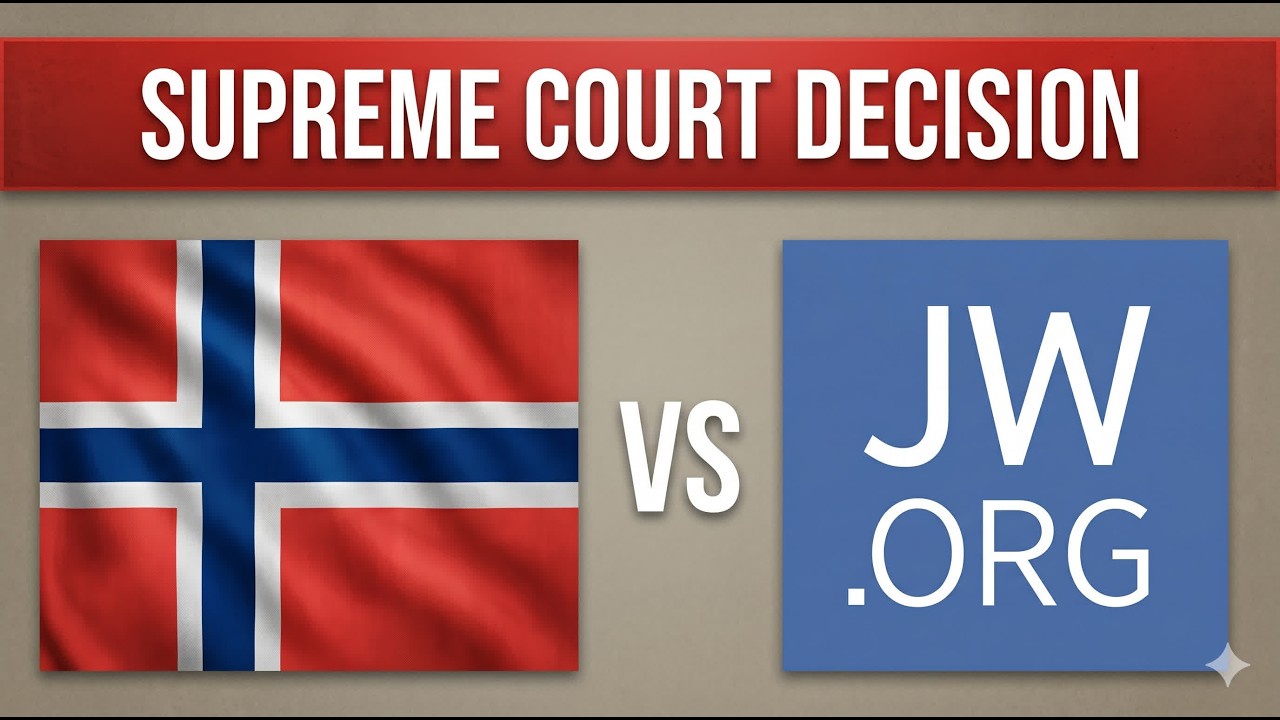
At the centre of the case was a fundamental question: how far may a democratic state go in judging, restricting, or punishing the internal beliefs and practices of a religious community? The Norwegian authorities had argued that the practices of Jehovah’s Witnesses, particularly social distancing from former members, amounted to negative social control, psychological pressure, or a violation of children’s rights and members’ right to leave freely. The Supreme Court, however, found that the state had not presented sufficient evidence to justify such severe administrative measures. The Court therefore ruled that the refusal of subsidies, deregistration, and denial of re-registration were invalid.
This judgment is not merely a victory for one religious group. It is a powerful legal statement about freedom of religion, freedom of association, the autonomy of religious communities, and the need for governments to meet a high evidentiary threshold before interfering with faith-based organizations. It also shows that even deeply controversial religious practices cannot automatically become grounds for state punishment unless the state can prove concrete legal harm.
The Case That Shook Norway’s Religious Freedom Debate
The dispute began after criticism was directed at Jehovah’s Witnesses over their internal practice of limiting social association with former members who had been expelled for serious misconduct or who had formally disassociated themselves from the community. A former member had brought concerns to Norwegian authorities, arguing that this practice placed pressure on individuals and could harm those who left the faith.
Norway had previously recognized Jehovah’s Witnesses as a registered religious community and had allowed them access to state subsidies for many years. The issue escalated when the authorities moved beyond criticism and took formal action: public funding was denied, registration was removed, and later re-registration was refused. These measures affected not only the community’s finances but also its legal status as a recognized religious body.
The case eventually reached the Supreme Court, where the central issue became whether the government’s decisions were legally justified under Norwegian law and the European Convention on Human Rights. The Supreme Court examined the relationship between the Norwegian Religious Communities Act, the right to freedom of religion, the rights of children, and the right of members to leave a religious community freely.
The Supreme Court’s Core Finding: The State Did Not Prove Its Case
The Supreme Court concluded that the state had not shown sufficient evidence that Jehovah’s Witnesses’ practices violated the rights of children or subjected minors to psychological violence or negative social control of such severity that legal intervention was justified. The Court noted that internal guidelines existed for dealing with minors and that the evidence did not document an actual scale of child exclusions sufficient to support the state’s position.
This point is crucial. The Court did not simply say that religious communities are above scrutiny. It said something more precise and more important: if the state wants to deny funding, remove registration, or interfere with a religious organization’s legal status, it must prove that the legal conditions for such intervention are truly met.
In other words, suspicion, disagreement, public criticism, or discomfort with a religious teaching is not enough. The state must establish serious, documented, legally relevant harm.
Religious Autonomy and the High Threshold for State Intervention
A major part of the judgment concerned the autonomy of religious communities. The Supreme Court emphasized that the threshold for denying state subsidies and registration is high and that the relevant provisions of Norwegian law must be interpreted in light of religious freedom under the European Convention on Human Rights.
This means that religious communities must generally be free to define their beliefs, membership standards, moral teachings, and internal discipline, even when parts of society disagree with those beliefs. The Court recognized that Jehovah’s Witnesses’ practice of exclusion and social distancing is rooted in their religious doctrine and is known to members.
The Court therefore drew a sharp line between state disagreement with a religious practice and state power to legally punish that practice. The first may exist in a pluralistic society. The second requires strong legal justification.
The Right to Leave: A Central Legal Question
One of the most important issues was whether former members were genuinely free to leave Jehovah’s Witnesses. The state had argued that social consequences attached to leaving could amount to improper pressure and therefore undermine the right of free withdrawal.
The Supreme Court, however, held that Jehovah’s Witnesses meet the legal requirement of free and unconditional withdrawal under Norwegian law. A majority of three judges found that the practice did not amount to undue pressure in violation of Article 9 of the European Convention on Human Rights. The majority placed weight on the fact that the practice is part of the community’s doctrine, is known to members, and does not involve direct pressure, coercion, or threats.
This is a delicate distinction. The Court did not deny that leaving a close religious community may have painful social consequences. But it found that those consequences, as presented in the case, did not reach the level needed to justify deregistration and denial of state support.
Family Relationships and the Limits of the Practice
The Court also addressed the question of family ties. According to the Supreme Court’s summary, the practice of exclusion does not apply to family members living in the same household, and family ties are not severed for family members outside the household. This was one of the elements considered by the majority when deciding that the legal conditions for denying subsidies and registration had not been met.
This point mattered because much of the public controversy around shunning practices often focuses on the fear that family relationships may be destroyed. The majority did not accept that the evidence before the Court justified the state’s strongest administrative sanctions.
The Court’s Decision: Deregistration and Subsidy Refusal Invalid
The final result was clear: the decisions to deny state subsidies and deregister Jehovah’s Witnesses could not stand. The Supreme Court declared the measures invalid.
This outcome restores the legal position of Jehovah’s Witnesses in Norway and overturns the state’s attempt to use registration and public funding as tools of pressure against the religious community. It also sends a wider message to governments across Europe: administrative power cannot be used lightly against religious minorities, especially when fundamental rights are involved.
There Was a Dissent — and It Matters
The ruling was not entirely unanimous on every issue. Two judges dissented on the question of whether Jehovah’s Witnesses’ practices placed improper pressure on members who wanted to leave. The minority gave particular weight to the possibility that shunning could lead to loss of contact with family members, especially for minors. They considered that the conditions for refusing subsidies and registration had been met.
This dissent is important because it shows that the case raised serious and difficult questions. The judgment was not a simplistic endorsement of every internal practice of Jehovah’s Witnesses. Rather, it was a constitutional and human rights assessment of whether the state had the legal basis to impose severe sanctions.
The majority answered no. The minority would have allowed the state’s measures to stand. That division reflects the broader tension in democratic societies between protecting individuals from harmful social pressure and protecting religious communities from excessive state interference.
Why This Ruling Is Bigger Than One Religious Community
This judgment will likely be studied far beyond Norway because it touches on a central democratic issue: can the state financially or legally punish a religious group because it disapproves of its internal doctrine?
The Supreme Court’s answer was cautious but firm. A state may regulate religious communities in certain circumstances. It may protect children, prevent coercion, and defend individual rights. But it must act within strict legal limits. It must prove its case. It must respect religious autonomy. It must distinguish between actual rights violations and controversial beliefs.
For minority religions, this ruling is especially significant. Smaller or unpopular religious groups are often more vulnerable to political pressure, public suspicion, and administrative overreach. The decision confirms that religious freedom is not reserved only for large, socially accepted, or culturally comfortable faiths. It also protects communities whose beliefs may be misunderstood, unpopular, or sharply criticized.
A Legal Victory, but Also a Warning
For Jehovah’s Witnesses, the ruling is a major legal victory. It restores recognition, invalidates the subsidy ban, and confirms that the state’s actions went too far. The religious community described the decision as a positive and final ruling after judicial review of its beliefs and practices.
But the judgment also carries a warning for all religious organizations: internal practices may still be scrutinized when they intersect with children’s rights, individual freedom, or alleged coercion. Religious autonomy is strong, but it is not unlimited. The state failed in this case because it did not prove the level of harm required by law, not because religious communities are immune from legal standards.
The Norwegian Supreme Court’s ruling in favour of Jehovah’s Witnesses is a landmark decision for religious freedom in Europe. It reaffirms that a government cannot remove legal recognition or deny public subsidies to a religious community simply because its beliefs or disciplinary practices are controversial. The state must demonstrate concrete, serious, and legally sufficient grounds before taking such measures.
At its heart, the ruling defends a difficult but essential principle of democratic life: freedom of religion means little if it protects only beliefs that society already approves of. True freedom is tested when the belief is unpopular, the community is controversial, and the pressure to intervene is strong. In this case, Norway’s highest court ruled that the state crossed the line.
The judgment does not end public debate over shunning, religious discipline, or the social consequences of leaving closed faith communities. Those debates will continue. But it does establish that legal punishment requires more than criticism, discomfort, or disagreement. It requires proof, proportionality, and respect for fundamental rights.
For Jehovah’s Witnesses, the decision is a restoration of status and recognition. For Norway, it is a constitutional correction. For Europe, it is a reminder that religious liberty is not a decoration of democracy — it is one of its deepest tests.