Although the number of known cases is still small – 12 individuals – the revocation of Jehovah’s Witnesses’ Russian citizenship has increased in frequency over the last year, the European Association of Jehovah’s Witnesses noted in its 2025 report.
Forum 18 is aware of two Jehovah’s Witnesses whose citizenship was revoked in 2021, one in 2023, and two in 2024. As many as 7 appear to have lost their citizenship in 2025.
The countries in which they were born or previously held citizenship include: Uzbekistan, Turkmenistan, Kazakhstan, Georgia, Belarus, and Ukraine. Some became Russian nationals through a simplified process for former Soviet citizens in the 1990s or early 2000s, others after growing up as nationals of independent post-Soviet states.
All 12 Jehovah’s Witnesses were convicted on criminal charges of “continuing the activities of a banned extremist organisation”. Six of them received prison terms, while the other six received suspended sentences.
Four are known to have been made stateless at the moment their Russian citizenship was rescinded, while three had retained citizenship of another country. The status of the other five is unknown.
Without valid documents, it is impossible to leave Russia (and unlikely another country will allow entry). People in this situation are therefore kept in detention centres for foreign nationals and stateless persons until they can obtain some form of documentation which will allow them to cross the border.
Five of the 12 Jehovah’s Witnesses have already been expelled from or have left Russia. Two are still imprisoned. Three are serving the probationary periods of their suspended sentences. The situation of the other two is unknown.
Forum 18 wrote to both the Federal Interior Ministry and the office of Federal Human Rights Ombudsperson Tatyana Moskalkova on 22 February 2026, asking why the citizenship of these Jehovah’s Witnesses could be rescinded if this would leave them stateless, and why they were being expelled from Russia when they posed no public danger. Forum 18 had received no response from either by the afternoon of the working day in Moscow of 27 February.
Jehovah’s Witnesses whose citizenship has been annulled include:
– Feliks Makhammadiyev,
– Konstantin Bazhenov,
– Rustam Seidkuliyev, and
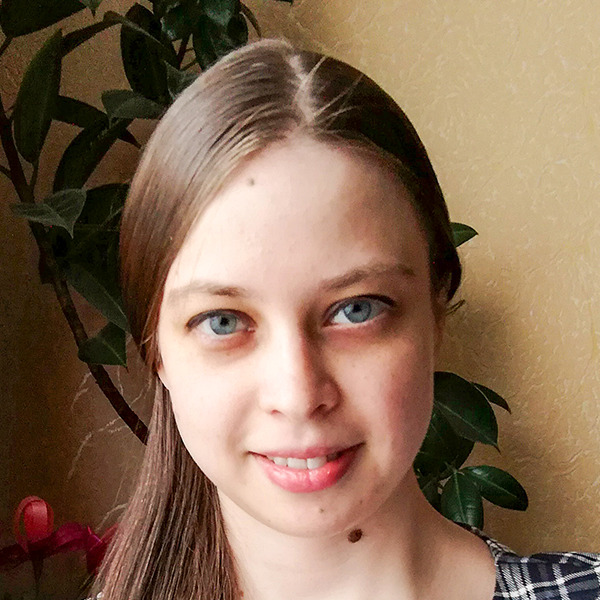
– Irina Khvostova.
Khvostova, who received a suspended sentence and is on probation until October 2026, is still living in Russia after successfully challenging a ban on entering the country. Both Magadan City Court and Magadan Regional Court upheld the revocation of her citizenship, however, on 26 August and 25 November 2025.
Khvostova is now a stateless person with no passport, Jehovah’s Witness lawyers noted to Forum 18 on 12 February. This creates difficulties in situations in which at least an internal passport is required. In Russia, these can include applying for a job, getting a driving licence, buying a phone sim card, checking into hotels, and using public services.
Revocation of citizenship, early release, expulsion from Russia
On 7 February 2025, Orenburg Region’s branch of the Interior Ministry issued a decision rescinding the Russian citizenship of Rustam Gennadyevich Diarov (born 13 August 1973 in Uzbekistan, then a constituent republic of the Soviet Union) and invalidating his Russian passport, according to court rulings seen by Forum 18.
At the time, Diarov was serving an 8-year prison sentence after being convicted of “organising the activities of a banned extremist organisation” (Criminal Code Article 282.2, Part 1) for continuing to meet for worship with fellow Jehovah’s Witnesses. This is one of the longest prison terms ever handed down to a Jehovah’s Witness. His conviction served as grounds for revocation of his citizenship. On 17 February 2026, however, he was released early on health grounds.
As in the cases of Feliks Makhammadiyev, Konstantin Bazhenov, and Rustam Seidkuliyev, Interior Ministry officials had ordered Diarov expelled from Russia. Prison officials had already confiscated his now-invalid Russian passport. Diarov left the country by plane shortly after his release, and by the evening of 18 February 2026, had arrived in Uzbekistan’s capital, Tashkent. He was accompanied by his wife Yelena Diarova, who is a Russian citizen.
Diarov “openly stated on the application [for Russian citizenship] that he was a Jehovah’s Witness. At the time, this religion was officially registered in the Russian Federation. Eighteen years later, the Ministry of Internal Affairs claimed that Rustam had provided ‘knowingly false information’ while assuring the state of his commitment to upholding the Constitution and laws”, the European Association of Jehovah’s Witness noted in its report on Diarov’s early release on 18 February.
“It appears that Diarov was expected to foresee that years later, the Witnesses’ legal entities in Russia would be liquidated and that he himself would be convicted for simple religious activity,” his lawyer commented in the same report.
Diarov – who had no citizenship other than Russian – challenged the Interior Ministry’s decision unsuccessfully at Lenin District Court, Orenburg, on 25 July 2025. Orenburg Regional Court upheld the ruling on 6 November 2025.
According to the district court ruling, seen by Forum 18, Diarov argued that the decision “significantly violates his rights, in particular, with respect to his private and family life”. He pointed out that his mother and wife are both Russian citizens and resident in Russia, and his mother “requires constant care due to her age and state of health”.
Diarov cited his ownership of property, a stable source of income, the absence of tax arrears or any other debts, positive character references, and his lack of any administrative offences as evidence of his “stable social tie with the Russian Federation”.
Judge Vitaly Katerinin of Lenin District Court concluded, however, that the decision to revoke Diarov’s citizenship does not constitute “excessive and unjustified interference” in his personal and family life, and that it “meets the principles of fairness and proportionality to the violations committed”.
Diarov’s criminal conviction “is an unconditional basis for the termination of his citizenship of the Russian Federation, which, contrary to [Diarov’s] arguments, cannot be made dependent on his financial or family status”, the judge noted, given that the offence of which he was found guilty “infringes on the specially protected institutions of society and the state”.
“The commission of socially dangerous attacks on specially protected public relations, by a person who previously acquired Russian citizenship, in the presence of a final court verdict, presumably implies the absence of any real social and legal connection with the Russian Federation”, Judge Katerinin concluded.
At the time, presumably given Diarov’s continued incarceration (with a projected release date of 29 July 2027), Interior Ministry authorities had not yet issued any order expelling him from Russia or barring him from re-entering the country. Judge Katerinin therefore decided that rescinding his citizenship did not stop him living in Russia “and, accordingly, does not violate his right to respect for his private and family life, or to communicate and live with close relatives after his release from the correctional facility”.
Forum 18 wrote to the Orenburg Region branch of the Interior Ministry on 22 February 2026 to ask why they had rescinded Diarov’s citizenship when this would make him stateless and whether (and for how long) he is now barred from re-entering Russia. Forum 18 had received no response by the afternoon of the working day in Orenburg of 27 February.
Rustam Diarov was born in 1973 in Samarkand in the Uzbek Soviet Socialist Republic. In August 2007, he gained Russian citizenship in Orenburg Region in western Siberia by means of a simplified procedure for former Soviet citizens, according to Orenburg Regional Court’s November 2025 decision on his lawsuit, seen by Forum 18. By the time of his arrest, he was living in the southern city of Astrakhan, working as an actor at a puppet theatre.
The Investigative Committee opened a case against him under Criminal Code Article 282.2, Part 1 in June 2020. As part of the same case, they indicted Diarov’s fellow Jehovah’s Witnesses Sergey Klikunov and Yevgeny Ivanov (also under Part 1) and Olga Ivanova (under Part 2, “Participation in the activities of a banned extremist organisation”). Investigators arrested all four during raids on 27 Jehovah’s Witness homes on 9 June 2020.
Astrakhan’s Trusovsky District Court found Diarov, Klikunov, Ivanov, and Ivanova guilty on 25 October 2021 after a four-month trial. Diarov and the other two men were sentenced to 8 years’ imprisonment in a general-regime prison colony, plus 1 year’s restrictions on freedom and a 5-year ban on leading and participating in the work of public organisations.
The Court handed Ivanova a sentence of 3 years and 6 months’ imprisonment, plus 1 year’s restrictions on freedom and a 3-year ban on leading and participating in the work of public organisations. She was released on 11 June 2024.
Diarov and his fellow defendants appealed unsuccessfully at Astrakhan Regional Court on 3 March 2022. He served his sentence first in Tatarstan’s Correctional Colony No. 4 in Nizhnekamsk, then from April 2023 in Correctional Colony No. 8 in Almetyevsk, also in Tatarstan.
Diarov has a number of chronic illnesses which worsened in prison conditions, according to the European Association of Jehovah’s Witnesses, and was hospitalised in September 2025. In December 2025, doctors diagnosed him with a malignant tumour, and a Federal Penitentiary Service (FSIN) medical commission ruled that treatment would be impossible in prison hospital facilities.
Diarov had been due to complete his sentence on 29 July 2027, taking into account the 630 days he had spent in detention during the investigation and trial and between conviction and appeal. Instead, he left the prison colony on 17 February 2026 after Privolzhsky District Court in Kazan authorised his early release. He arrived in Uzbekistan with his wife on 18 February.