Recent shifts in religious orientation are expanding individual decisions regarding the use of one’s own blood in medical and surgical treatments, while maintaining historical restrictions and reigniting ethical and legal debates involving religious freedom, patient autonomy, and the role of physicians in critical situations.
Jehovah’s Witnesses have announced a significant change to one of their best-known and most controversial medical guidelines.
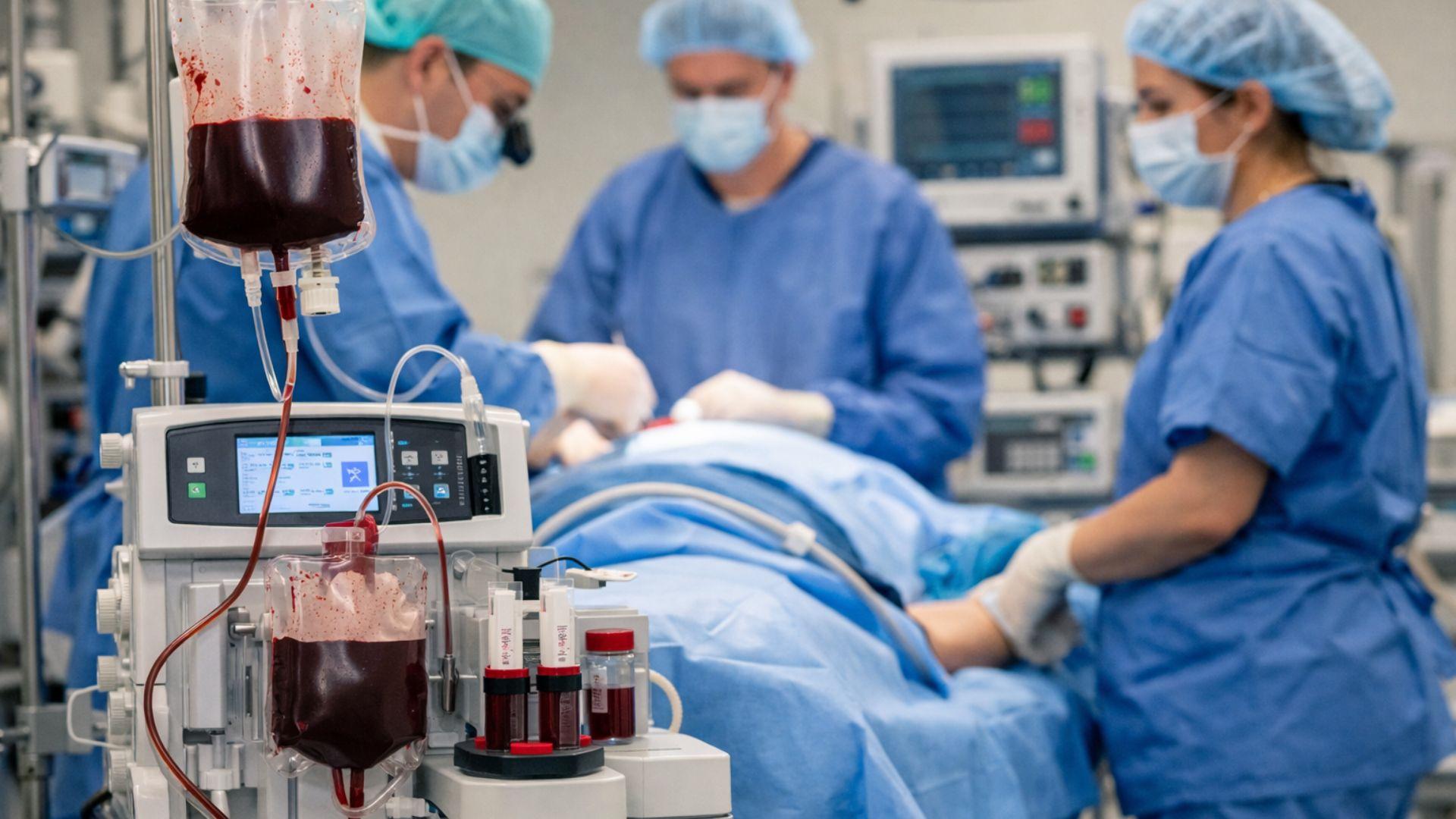
As of an update released on March 20, 2026, believers were able to individually decide whether to authorize the withdrawal, storage, and subsequent reinfusion of their own blood in medical and surgical procedures.
However, the ban on receiving blood from other people was maintained by the organization
The guidance was presented by Gerrit Lösch, a member of the religion’s Governing Body, in a statement published on the group’s official website.
According to the new formulation, Each Christian must decide how their own blood will be used in medical care.including in situations where it can be removed, stored, and returned later
In practice, the change opens the door to previously planned autologous procedures, something that has been rejected by legal scholars for decades.
Use of one’s own blood in surgeries and medical treatments.
The change does not eliminate the religious basis that underpins the refusal of allogeneic transfusions, that is, transfusions with blood from donors.
In the medical supplies maintained by the organization itself, Jehovah’s Witnesses continue to assert that they do not accept blood transfusions from third parties. and who register their decisions in advance in advance directives.
At the same time, the group already acknowledged, prior to this review, some techniques for managing one’s own blood, such as hemodilution and intraoperative recovery, provided they were compatible with the individual patient’s awareness.
With the new guidelines, scheduled procedures gain a broader scope for decision-making by members of the religion.
In elective surgery, for example, the patient can now consent to having their blood collected before the procedure, stored, and reused afterward.
Previously, the organization’s own literature treated the prior storage of autologous blood as incompatible with the biblical interpretation adopted by the group.
Still, the easing of restrictions has limited scope.
It does not change the refusal of the four main blood fractions from third parties, nor does it resolve the impasse in emergency situations, when a donated transfusion may be considered by the medical team as the quickest or most effective measure to prevent death.
Therefore, although it represents an important turning point in institutional discourse, The change does not end the historical conflict over blood transfusions..
The organization itself describes the review as a clarification regarding the use of the patient’s own blood.
At the same time, the doctrine continues to be presented as derived from biblical passages that advocate abstinence from blood.
This helps explain why the group considers the new measure a matter of conscience within a theological framework that remains preserved.
Number of faithful and global impact of the decision
The most recent data released by Jehovah’s Witnesses themselves indicates a global contingent of over 9,2 million publishers in the service year 2025.
In Brazil, the organization reports 938.337 ministers who teach the Bible and more than 12 congregations..
These numbers are higher than the rounded estimates that often circulate in journalistic texts.
The statistical update is relevant because it shows the magnitude of a decision that affects a significant number of believers.
Consequently, the impact also reaches hospitals, medical teams, and courts.
In both public and private healthcare systems, the relationship between patient autonomy, religious freedom, and professional responsibility has already been strained in specific cases.
Court decisions regarding blood transfusions in Brazil
In the country, the issue gained clearer outlines following the Supreme Federal Court’s ruling in September 2024.
At the time, the Court acknowledged that Adult and capable patients may refuse blood transfusions due to religious beliefs..
The Supreme Federal Court (STF) also established the possibility of alternative treatment being funded by the public authorities.
For this to happen, criteria such as technical feasibility, medical agreement, and the patient’s free and informed consent must be respected.
This understanding helped to support subsequent decisions.
In November 2025, a patient from Campinas obtained a court order requiring the Brazilian public health system (SUS) to cover the cost of a bone marrow transplant without blood transfusion.
The case was considered relevant because it involved public funding for a procedure outside the traditional healthcare system.
A few months later, in January 2026, the São Paulo Court of Justice denied compensation to the family of a young woman who received an unauthorized blood transfusion at a public hospital.
According to the court, the patient was in serious condition, and the medical team adopted the procedure because they considered it essential to try to save her life.
The decision reinforced the legal weight of the right to life in situations of imminent risk.
Criticisms and limitations of the new religious rule.
The review announced by the religious leadership also reignited criticism from former members and observers.
For this group, the authorization to store and reuse their own blood only partially corrects the historical rigidity of the doctrine.
In the opinion of these critics, The main problem remains in emergency situations., when the use of blood from a third party can be crucial.
Thus, the change broadens the range of choices in planned surgeries. On the other hand, it leaves intact the most sensitive point of the debate involving the risk of death.
The new rule is likely to have an immediate impact on hospital protocols and consent forms.
It should also influence the planning of elective surgeries in different countries. Still, it preserves the core of the prohibition that made the religion widely known in public debate.